The short answer
- Comments are questions, objections and requests in your audience's own words. Grouped and counted, they become a ranked list of content ideas.
- The method has five steps: collect the comments, group them into themes, count each theme, pick one, and answer it with a post.
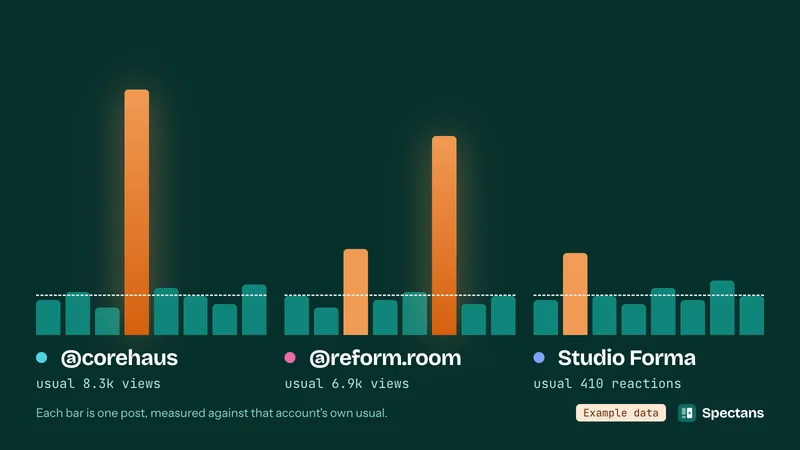
- Start with the comments under posts that beat their account's usual, yours and your competitors'. Those posts drew the most reaction, so their comments show what set it off.
- TikTok and YouTube have built-in tools that summarise comments by topic. We found no equivalent on Instagram's own help pages.
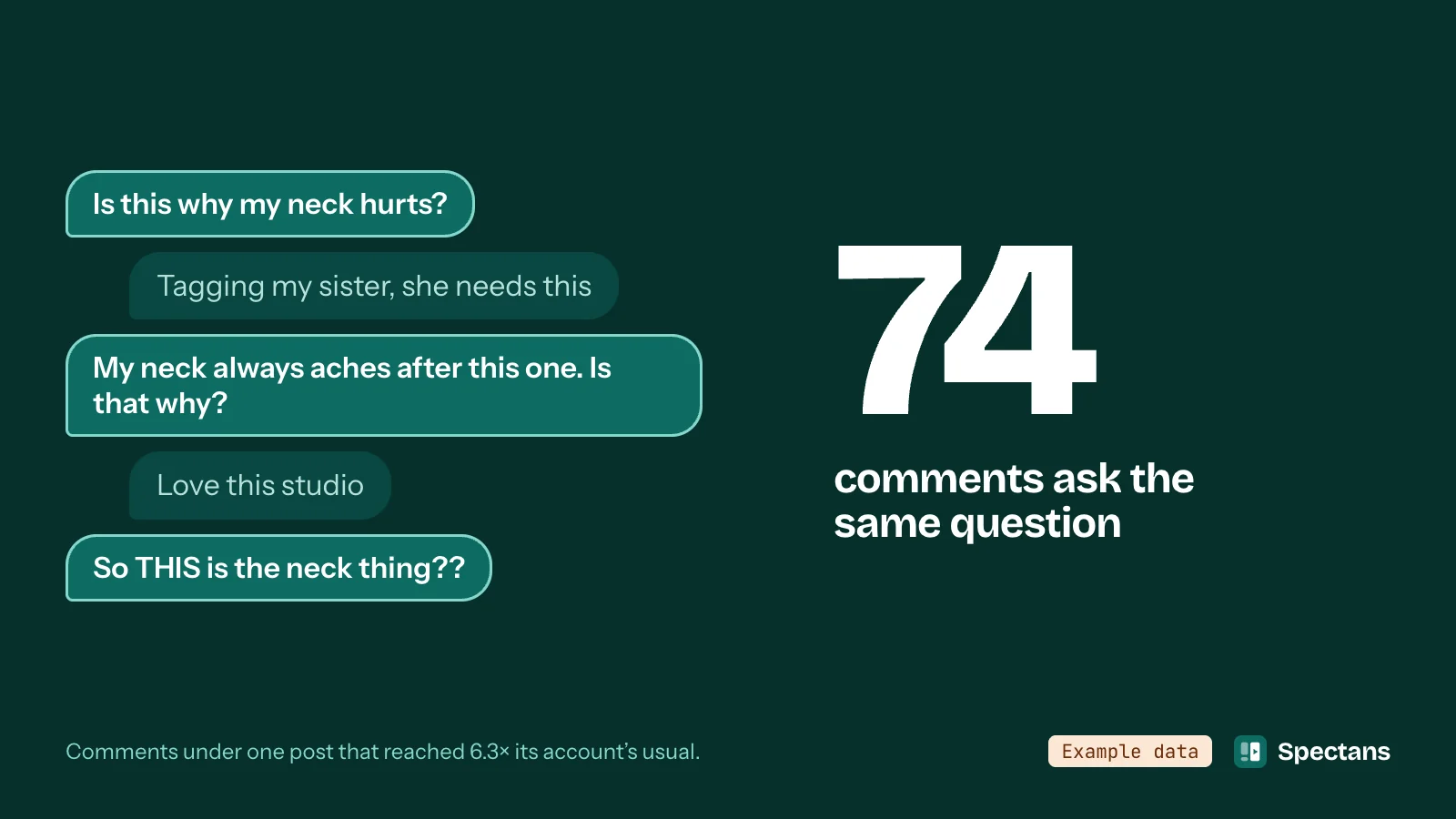
To turn comments into content ideas, collect the comments under posts that performed well, group them into themes, count each theme, and make a post that answers the biggest one. A single comment is an opinion. The same question asked 74 times under one video is a brief for the next one.
Why comments are a good source of ideas
A comment costs effort to write. People leave one when a post made them want something: an answer, a simpler version, a price, or the chance to disagree. That makes comments a record of what a post left unanswered, in the audience’s own words.
The networks build features on the same idea. TikTok added video replies to comments in 2020, so a creator could answer a question with a new video. Its Comment insights tool lists getting inspiration for future content from audience suggestions as one of its uses.
There is research behind the wider principle, with a limit worth stating. A 2019 study in Marketing Science compared customer needs found in online reviews with needs found through professional interviews, and concluded that user-written content was at least as valuable a source. That study was about product development and reviews, not social posts. It supports the idea that what customers write is a valid place to look for what they need. It does not prove that comment-led content performs better, and we found no study that tests that.
What the networks give you
Some of the work is built into the apps. This is what each company documents on its own help pages.
| Network | Feature | What it does |
|---|---|---|
| TikTok | Comment insights | An AI summary that sorts a post’s comments into categories. Works on your posts and on other creators’ posts. Not available everywhere, and for adults only. |
| TikTok | Reply to comments with video | Answer a comment on your video with a new video. |
| Reply to a comment with a reel | The new reel carries the comment as a sticker. If the comment is deleted, the reply reel is deleted too. | |
| YouTube | Reply to comments with Shorts | Answer a comment on your channel with a Short that shows the comment. |
| YouTube | Ask Studio | An AI assistant in YouTube Studio. YouTube’s own example prompts include asking for the common themes in a video’s comments. |
Two gaps to know about. We found no Instagram tool that summarises comments into topics, on either its help centre or its creator site. And YouTube’s older Inspiration tab, which used comment insights for idea cards, is being retired from August 2026 in favour of Ask Studio.
The built-in tools work one post at a time, mostly on your own account. The method below works across several posts and several accounts, which is where the patterns are.
The method: collect, group, count, pick, answer
1. Collect the comments
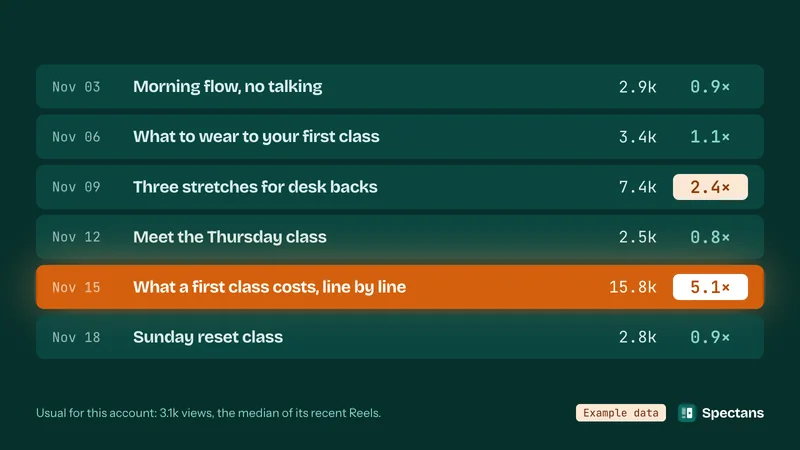
Start with the right posts. Pick three to five that beat their own account’s usual result, from your account and from competitors who sell to the same people. These are outlier posts: they drew the most reaction, so their comments show what set that reaction off. If you have not scored posts this way yet, see how to find outlier posts.
Copy the top-level comments into a spreadsheet, one per row, with three columns: the comment, the post, the account. Skip replies to other comments at first. They are usually conversation, not requests.
2. Group them into themes
Read the first 50 comments and write a name for each idea that comes up more than once. Then sort the rest into those names, adding a new one when a comment does not fit.
A theme has to be specific enough to answer. “Questions” is a category. “Asks whether this exercise is why their neck hurts” is a theme. Most comments fall into a few kinds:
| Kind of comment | Example (invented) | Worth a post? |
|---|---|---|
| Question | “Is this why my neck hurts?” | Yes. The clearest brief you will get. |
| Request | “Can you show a beginner version?” | Yes. They have told you the format too. |
| Objection | “My instructor says the opposite.” | Often. Answer it calmly, with the reason. |
| Personal story | “I did this wrong for two years.” | Sometimes. It shows who the post reached. |
| Tag or share | “@mia this is you” | No idea in it, but it shows the post spread. |
| Praise and emoji | “Love this” | No. |
3. Count each theme
Count the comments in every theme. Next to each count, note how many posts and how many accounts the theme appeared under.
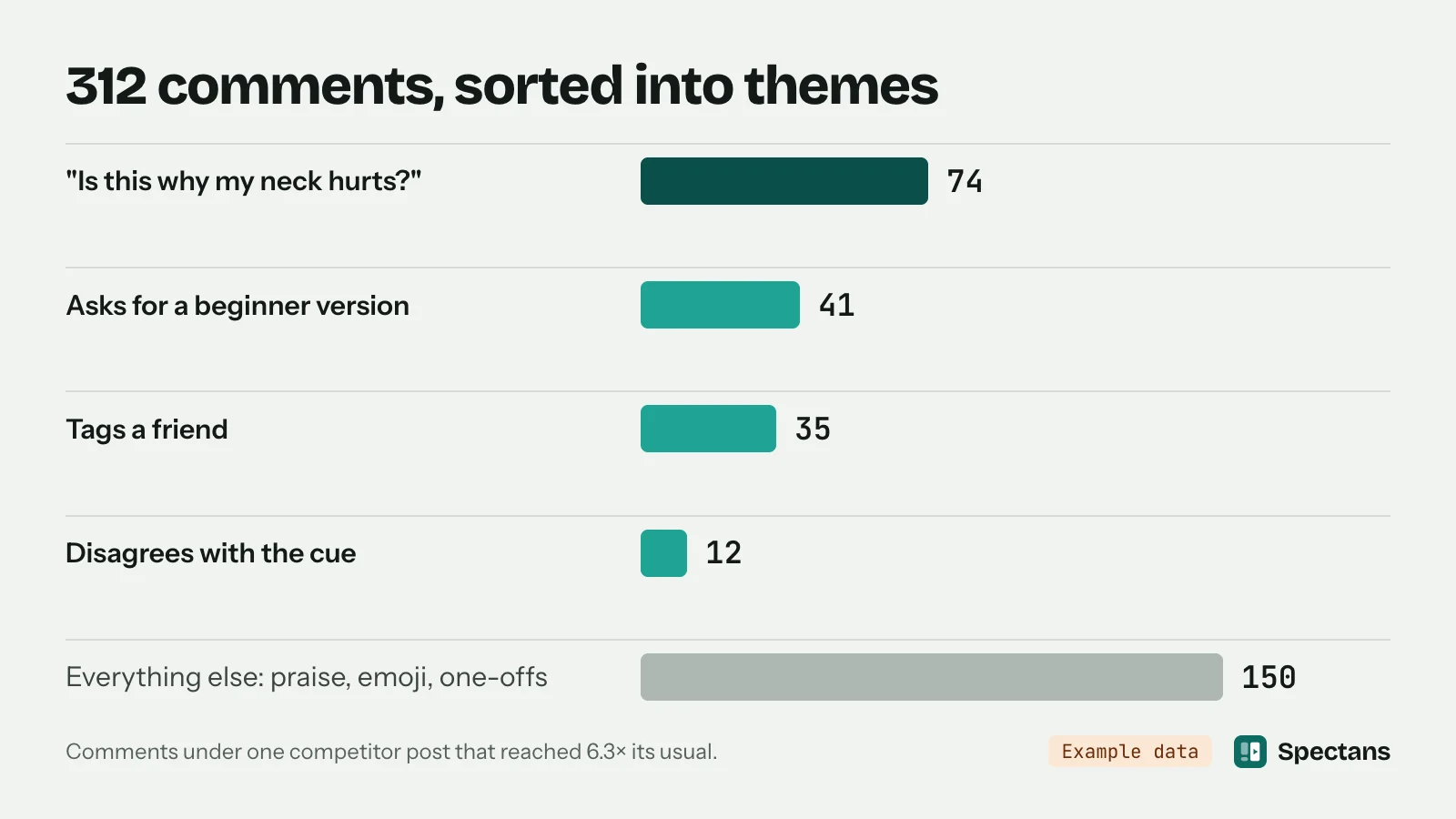
Expect the remainder to be the biggest group. In this invented example, about half the comments are praise, emoji and one-offs, and that is normal. The count is what stops one vivid comment from steering your plan: 74 people asking the same thing outweighs one long, angry paragraph.
4. Pick one theme
Size is the first test, not the only one. A theme is worth a post when it passes four:
- It is large. It sits at or near the top of the count.
- It repeats across accounts. The same question under two competitors’ posts belongs to the niche, not to one video.
- It fits your brand. It belongs to one of your content pillars, and you can answer it honestly.
- Nobody has answered it well. Check the original caption, the account’s replies and its later posts. An unanswered question is an open door.
5. Answer it with a post
One theme, one post. Use the commenters’ wording in the hook, because that is how the question sounds in the audience’s head.
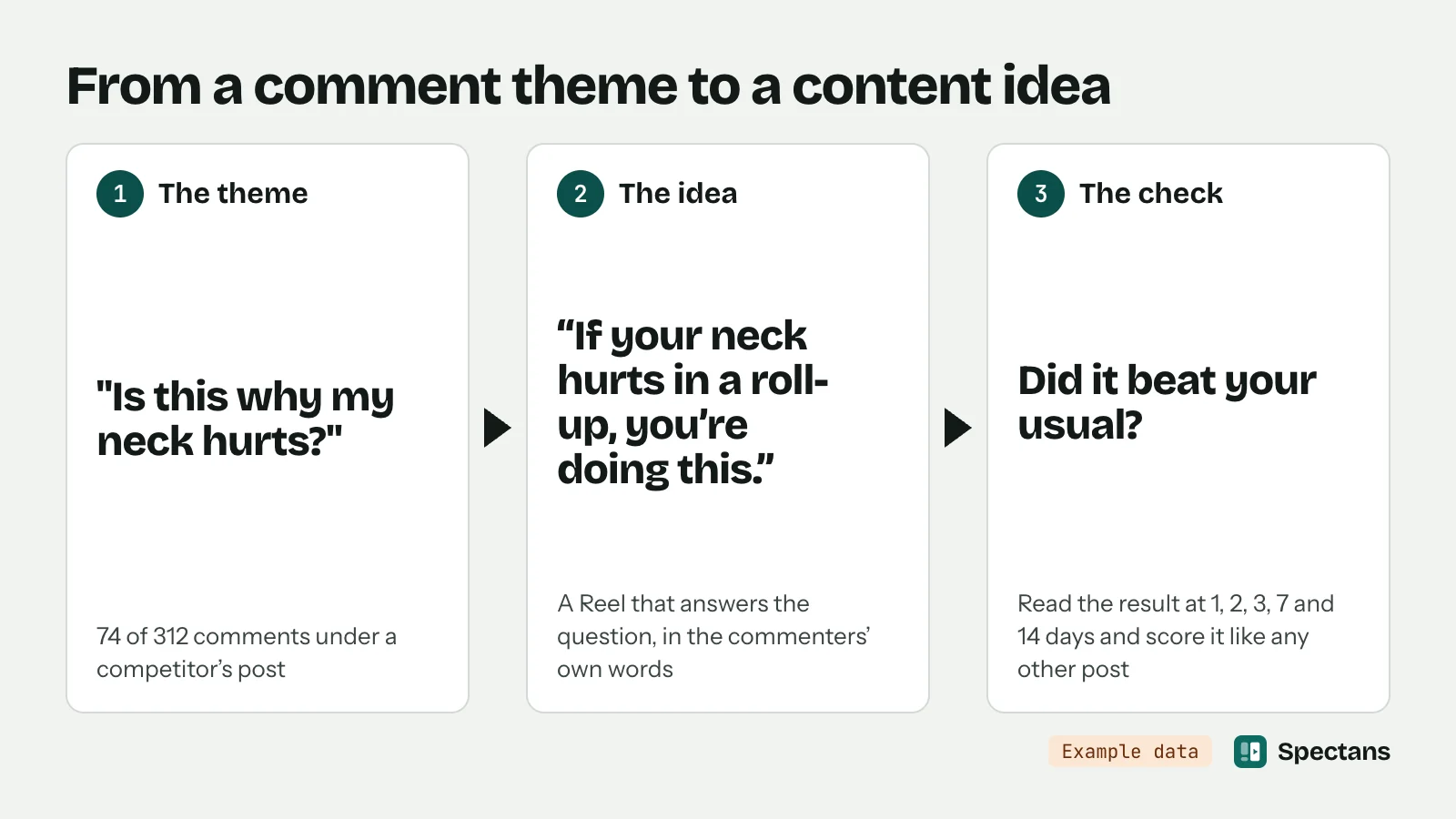
If the theme came from your own post, reply to the original comment with the new video. On TikTok, Instagram and YouTube Shorts the reply carries the comment as a sticker, so viewers see the question being answered. On Instagram, keep a copy: the reply reel is removed if the comment is deleted.
Then check the result. Score the new post against your account’s usual, the same way you scored the posts you started from. An idea that came from 74 comments and lands at 0.8× has still taught you something about the gap between asking and watching.
What to leave out
A few kinds of comment distort the count and are better removed first:
- Giveaway entries. “Done!” and three tagged friends say nothing about the content.
- Spam and bots. Usually obvious, sometimes numerous.
- One person, many comments. Count people, not messages, when one commenter dominates a thread.
- Comments about the creator, not the topic. Appearance, voice, the dog in the background.
How many comments are enough?
No network or study gives a number for social comments. The founding paper on voice-of-customer research, Griffin and Hauser (1993), asks how many customers need to be interviewed, and a figure of 20 to 30 is often attributed to it. We read only the abstract and could not confirm that figure.
A practical rule is to stop when new comments stop producing new themes. If a post has fewer than about 30 comments, combine several posts on the same topic before you count. If your own posts draw few comments, lean on competitors’ posts, and add the questions customers send you directly.
Where this fits
Comments tell you what to make next. They work best beside two other sources: the organic posts that beat their accounts’ usual, covered in social media competitor analysis, and what competitors pay to say, covered in the Meta Ad Library guide. TikTok’s Creator Search Insights adds a fourth view where it is available: what people search for in the app.
Questions
-
How do I get content ideas from comments?
Collect the comments under posts that performed well, group them into specific themes such as a repeated question or objection, and count how many comments fall in each theme. The largest theme that fits your brand and has not been answered is your next content idea. Answer it in one post, using the commenters' wording in the opening.
-
Can I use comments on my competitors' posts?
Yes. Comments on public posts can be read by anyone, and a competitor's audience is close to yours. Use the theme, not the person. Take the question that many people asked and answer it in your own post, without quoting or naming individual commenters.
-
Is there a tool that analyses comments for content ideas?
TikTok has Comment insights, which uses AI to sort a post's comments into categories and names inspiration for future content as one use. YouTube's Ask Studio can answer questions about themes in a video's comments. We found no equivalent on Instagram's own help pages. Spectans, which is in private build, groups the comments under posts at 2 times usual or more into counted themes.
-
How many comments do I need to read?
There is no official number. Read until new comments stop producing new themes. For most posts that happens well before the end. With fewer than about 30 comments on a post, combine several posts on the same topic before you count.
-
What if my own posts get very few comments?
Use competitors' posts. Find accounts that sell to the same people, pick their posts that beat their own usual, and read those comments. You can also add the questions customers send by direct message or email.
-
Should I reply to the comment with a video?
On your own posts, yes. TikTok, Instagram and YouTube Shorts all let you reply to a comment with a new video that carries the comment as a sticker. On Instagram the reply reel is deleted if the original comment is deleted, so keep a copy of the video.
Sources
We last read these pages on November 27, 2026.
- Comment insights on TikTok TikTok Support
- Product tutorial: reply to comments with video TikTok Newsroom, 18 June 2020
- Reply to a comment on a reel with a reel Instagram Help Center
- Reply to comments with your YouTube Shorts YouTube Help
- Learn about Ask Studio in YouTube Studio YouTube Help
- Explore Inspiration tab on YouTube YouTube Help
- Creator Search Insights TikTok Newsroom, 13 March 2024
- Identifying Customer Needs from User-Generated Content Timoshenko and Hauser, Marketing Science 38(1), 2019 (author manuscript, MIT DSpace)
- The Voice of the Customer Griffin and Hauser, Marketing Science 12(1), 1993 (abstract)
In Spectans
- Comment themes
Comments under outlier posts, read and grouped into counted themes that feed ideas.
- Content ideas
A weekly batch of ranked ideas, each tied to the posts behind it and written for your brand.